

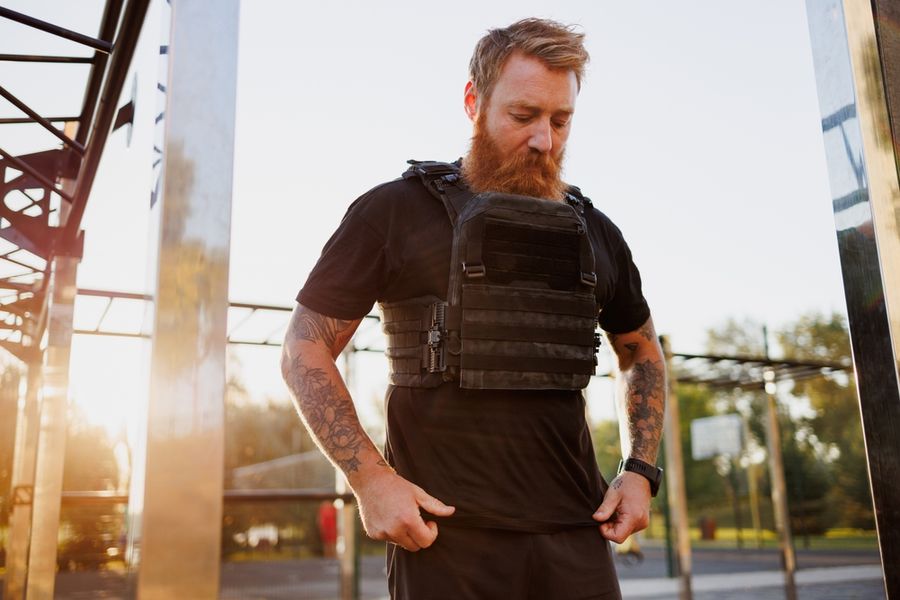
A weighted vest can make familiar exercises more demanding without requiring a rack of plates, dumbbells, or other bulky equipment. Because the resistance travels with you, a vest can fit into walking, bodyweight workouts, stair sessions, and outdoor training as easily as it can a home-gym routine. Designs vary considerably, however, from slim micro-loaded models to heavy plate carriers. Understand how the best options offer different approaches to adjustable resistance, fit, portability, and training intensity.
Choose the Right Kind of Resistance
Weighted vests generally fall into two broad categories. Some spread many smaller weights around the torso, allowing resistance to be adjusted in small increments. Others hold larger plates or removable weight packets, making substantial changes in load quicker but often producing a bulkier profile.
Think about the movements you plan to perform before choosing. Walking and dynamic bodyweight exercises may benefit from a close-fitting vest that limits unnecessary movement. Pullups, pushups, squats, and conditioning circuits may leave more room for a heavier plate-style design.
Fit matters as much as maximum capacity. A vest that shifts noticeably during every repetition can become distracting, while one that is excessively tight may limit comfortable movement. Look for adjustment around the torso and enough room through the shoulders to move naturally.
Hyperwear Hyper Vest ELITE: Best for Fine Weight Adjustments
The Hyper Vest ELITE stands out for distributing many small steel weights throughout a relatively slim vest rather than concentrating resistance in a pair of large plates. Its galvanized steel weights come in 2.25-ounce increments, making it possible to make much smaller resistance adjustments than with conventional plate-loaded designs.
Weight capacity depends on vest size, ranging from up to 15 pounds in the small to 25 pounds in the extra-large. The CORDURA fabric incorporates two-way stretch, while elastic side lacing adjusts the fit around the torso. A full front zipper makes the vest easier to put on and remove.
This design makes particular sense for users who want to increase resistance gradually. Small changes can be useful when transitioning from ordinary bodyweight exercises to weighted versions without making a large jump all at once. Its low-profile construction is also appealing for activities that involve frequent changes of direction or arm movement.
Rogue Plate Carrier: Best for Simple Plate-Loaded Training
The Rogue Plate Carrier takes a very different approach. Instead of distributing dozens of small weights, it uses front and rear pockets designed for compatible cast weight-vest plates. Those plates are available in several load options, including pairs weighing 5, 7.5, 10, or 20 pounds.
The carrier itself weighs just over one pound in a medium and uses 1000D and 500D Cordura construction. Adjustable waist and shoulder straps help stabilize the vest, while interior padding and minimized seams are intended to reduce irritation as the wearer moves.
This streamlined design works well for exercises where a substantial fixed load is desirable. Pullups, dips, pushups, step-ups, squats, and conditioning circuits can all be performed without holding separate weights.
Keep in mind that the vest and weight plates are separate components. That arrangement provides flexibility, but it also means users need compatible plates before the carrier adds meaningful resistance.
TRX HexGrip Weight Vest: Best for Heavier Adjustable Sessions
The TRX HexGrip Weight Vest is geared toward users looking for a heavier resistance option. Current configurations include 20- and 40-pound versions, with removable weight bricks allowing the load to be adjusted rather than requiring the full resistance for every workout.
The vest measures approximately 18.5 by 18.5 inches and uses adjustable shoulder and waist straps to modify the fit. Its materials include a polyurethane-coated exterior along with neoprene and polyethylene foam inside.
This option is better suited to people who already have experience exercising with added load and want a vest that can transition among strength exercises, conditioning workouts, and outdoor sessions. The removable resistance also makes it possible to lower the weight when changing from slower strength movements to exercises requiring greater mobility.
For a beginner, the full capacity may be unnecessary. Starting with a manageable resistance allows you to learn how the extra load changes familiar movements before deciding whether heavier training serves your goals.
CAP Adjustable Weighted Vest: Best for High Weight Capacity
The CAP Adjustable Weighted Vest offers considerably more maximum resistance than many compact fitness-oriented vests. Versions are available with maximum capacities ranging from 40 to 150 pounds, with removable steel-shot packets weighing approximately 0.75 pound each.
An adjustable belt changes the fit, while breathable mesh and neoprene padding are incorporated into the construction. Reflective strips are included as well. Because individual packets can be removed, the vest does not have to be used anywhere near its maximum capacity.
The higher-capacity versions are most relevant to experienced users specifically seeking substantial additional resistance. A vest capable of carrying a very heavy load is not automatically the better option for walking, fast conditioning work, or everyday bodyweight exercises.
The removable packets are the more broadly useful feature. They allow the same vest to be configured differently as exercises and training goals change.
Match the Vest to the Exercise
Maximum weight is only one consideration. A lower-profile vest with fine adjustments may be easier to integrate into walking, lunges, or circuits, while a plate carrier can be convenient when you want to add a predictable load to pullups and other strength exercises.
Also consider how often you expect to change resistance. Small removable weights offer precise progression but take longer to adjust. Large plates or bricks make bigger changes faster.
Whichever style you choose, learn how the vest affects your normal movement before adding more resistance. An exercise you perform comfortably without extra weight may feel considerably different once that load is carried across your torso.
Add Resistance Without Filling the Room With Equipment
A weighted vest can add another level of difficulty to familiar exercises while remaining compact enough to store in a closet or take outdoors. The Hyper Vest ELITE favors small, precise adjustments, the Rogue Plate Carrier offers a streamlined plate-based setup, the TRX HexGrip accommodates heavier adjustable workouts, and CAP provides unusually high capacity for users who specifically need it.
The most useful choice is not necessarily the heaviest vest. Prioritize fit, adjustment range, and the exercises you actually plan to perform. When the resistance matches both your experience and your routine, a weighted vest can make existing workouts more challenging without requiring an entire collection of additional equipment.