

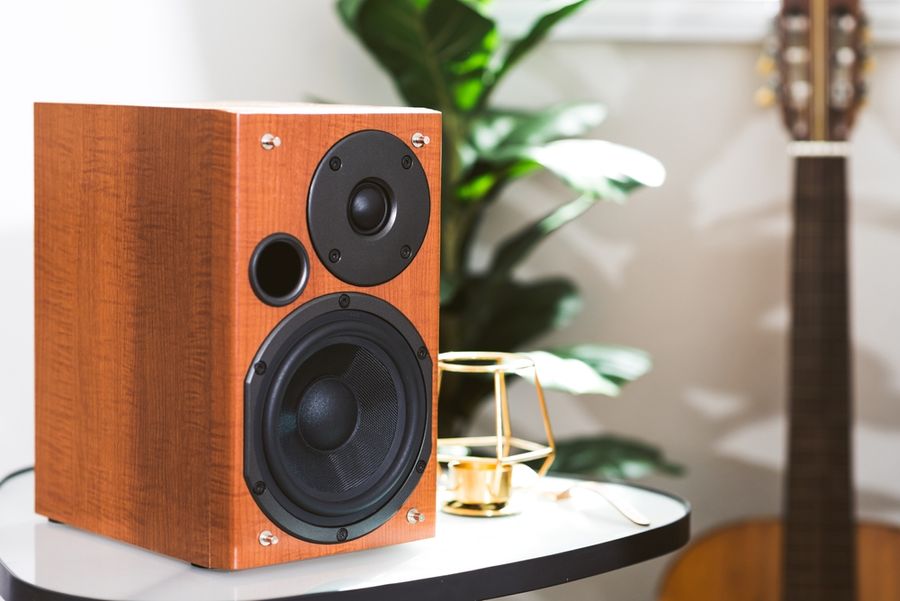
A dedicated listening room does not need custom construction, built-in acoustic treatment, or an expensive redesign. Many of the biggest improvements come from rearranging what you already own and making a few targeted additions. Speaker position, seating, rugs, curtains, lighting, and storage can all influence how comfortable the room feels and how clearly you hear your music. By addressing those details first, you can create a more inviting listening space without turning the project into a major renovation.
Start by Repositioning the Speakers
Before buying anything, experiment with where your speakers sit. Pushing them directly against a wall may be convenient, but moving them forward can change bass response and reduce some unwanted reflections. Angling the speakers slightly toward your main listening position can also help create a more focused stereo image.
A useful starting point is to arrange the left speaker, right speaker, and listening position roughly as the three points of a triangle. Keeping the speakers symmetrical and aiming the tweeters toward ear level provides a sensible baseline, but small adjustments are still important because every room behaves differently. Move one element at a time, listen to familiar music, and keep the arrangement that sounds most natural.
Give the Listening Chair Some Space
The best seat in the room should be comfortable enough for an entire album, but its position also matters. A sofa pressed directly against the rear wall can place your ears in an area where reflected bass becomes more pronounced. If moving the furniture is practical, try bringing the listening position slightly forward and listen for changes before settling on a permanent location.
Comfort should remain part of the decision. Choose a chair or sofa that supports a relaxed posture without forcing your head far above or below the speakers. You do not need specialized “audiophile” furniture. A supportive chair you already enjoy using is often a better choice than a piece purchased solely because it looks appropriate beside stereo equipment.
Soften Hard Surfaces With Everyday Furnishings
Rooms filled with bare floors, large windows, and hard walls can produce more reflected sound. You can address some of that without installing permanent acoustic panels. An area rug between the speakers and listening position can reduce floor reflections, while curtains can soften large expanses of glass.
Avoid assuming that more absorption is always better. A room filled with thick carpeting, heavy curtains, and oversized upholstered furniture can become overly subdued. Add furnishings gradually and listen after each change. The aim is not to make the room acoustically dead; it is to create a balanced environment where music remains clear without harsh reflections becoming distracting.
Keep Lighting Comfortable and Flexible
A listening room should encourage you to spend time there. Overhead lighting that feels appropriate for cleaning or working may be unnecessarily bright when you are sitting down with a record or playlist. Table lamps, floor lamps, or dimmable fixtures can provide softer light without requiring rewiring or other permanent changes.
Adjustable lighting also allows the room to serve several purposes. Brighter light may be useful when selecting records, reading liner notes, or changing equipment settings, while softer illumination can make a longer listening session more relaxing. Comfortable seating and adjustable, softer lighting are simple ways to make a listening space feel more inviting.
Organize Music and Equipment Around the Seat
Convenience affects how often you use a listening room. Keep the components you interact with most within easy reach, but avoid crowding every available surface with equipment. A low media cabinet, shelving unit, or compact rack can hold an amplifier, streamer, CD player, or record collection while leaving room around the speakers.
Cable organization can make the space feel calmer without affecting the walls. Reusable cable ties, sleeves, and clips can gather excess lengths behind furniture instead of leaving them across the floor. If you regularly switch among records, CDs, or other physical media, arrange the collection so frequently played titles are easy to reach from the listening area rather than requiring constant rearranging.
Avoid Buying Acoustic Treatment Too Early
Commercial acoustic panels and bass traps can be useful, but they should solve an identified problem rather than serve as the first step in building the room. Speaker movement, seating changes, rugs, curtains, and furniture placement cost little or nothing to experiment with and can reveal how much improvement is possible before specialized treatment becomes necessary.
If you still hear excessive echo or uneven bass after making those adjustments, targeted treatment may make more sense. Rugs, wall hangings, and other absorptive materials can reduce reflections in rooms with hard surfaces, while speaker and listening-position changes can also have a substantial effect. Knowing exactly what you want to correct makes it easier to avoid filling the walls with treatment that may not address the real issue.
Make the Room Personal Without Making It Crowded
A listening room should feel connected to the music you enjoy rather than resembling an equipment showroom. Album artwork, concert posters, books, record storage, and a few meaningful objects can give the space character without interfering with its primary purpose.
Leave enough open space to move around the speakers, reach your equipment, and sit comfortably. A room can still function as an office, den, or hobby room as long as the listening position and speakers are treated as the central relationship. Multipurpose furniture and closed storage can help keep less attractive accessories out of sight when they are not being used.
Build Comfort Through Small Adjustments
A comfortable listening room is less about construction than about making the existing space work deliberately. Moving the speakers, improving the seating position, softening reflective surfaces, adjusting lighting, and organizing equipment can all be done without opening a wall or committing to a costly redesign.
Make those changes gradually rather than transforming everything at once. Listen to familiar recordings after each adjustment and keep what genuinely improves either the sound or the experience of using the room. A space that sounds good, feels comfortable, and makes your music easy to enjoy can be built through thoughtful choices rather than major renovation.