

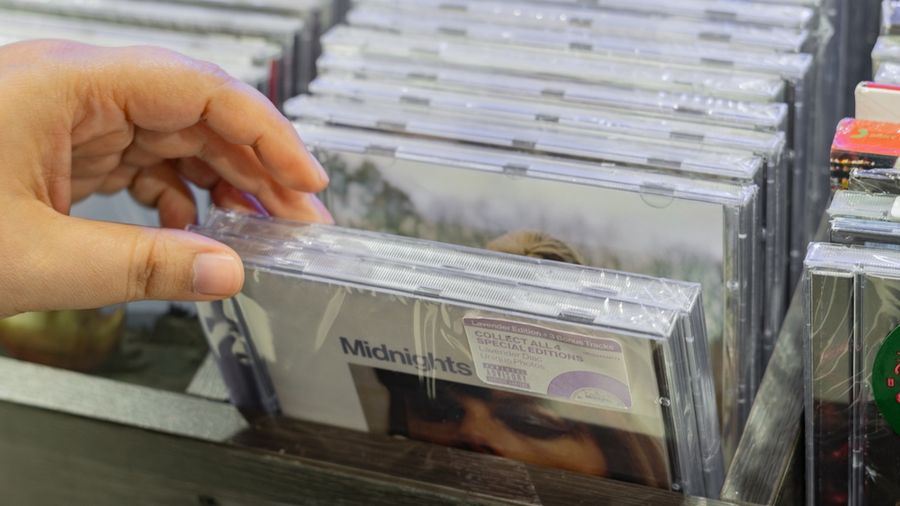
Compact discs spent years looking like a format the streaming era had left behind, but they never disappeared completely. Now, CDs are showing up again in conversations about physical music, artist merchandise, collecting, and album ownership. The numbers do not point to a vinyl-style revival across the entire U.S. market, yet certain artists and fan communities are generating substantial CD demand. The format’s renewed appeal comes from a mix of nostalgia, collectibility, convenience, and the simple satisfaction of owning music.
The Comeback Is Real—but It Has Limits
Calling CDs fully “back” would overstate what the latest U.S. figures show. In 2025, 29.5 million CDs were shipped in the United States, down from 33.3 million in 2024. CD revenue also declined 7.8% year over year. Vinyl remained the stronger physical format, selling 46.8 million units during the same period.
Those numbers make an important distinction. CDs are not currently following the same long-term growth trajectory that has defined vinyl’s revival. Streaming also continues to dominate how Americans pay for recorded music.
That does not mean the format is fading quietly into irrelevance. Another measure of U.S. music sales counted 33.8 million CDs sold during 2025 and found particularly strong momentum toward the end of the year. CD sales reached 8.3 million units in the third quarter and 11.4 million in the fourth.
Rather than a broad return to the 1990s, CDs appear to be developing pockets of renewed strength.
Younger Fans Are Treating CDs as Collectibles
One reason CDs have new cultural relevance is that buying a disc no longer necessarily means buying it solely as a playback format. For some fans, the physical album functions as merchandise, memorabilia, artwork, and a connection to a favorite artist.
That behavior has been particularly visible around K-pop. In 2025, 27% of U.S. K-pop fans reported purchasing a CD, compared with 19% of general music listeners. Seven of the 10 bestselling CD albums in the United States that year came from K-pop groups, and individual releases were often sold in multiple versions with different artwork, photo books, or collectibles.
The pattern is not entirely new. Earlier consumer research identified an increase in CD purchasing among Gen Z listeners connected with major artists including Taylor Swift, Harry Styles, and BTS. Notably, half of the Gen Z CD buyers in that research did not actually listen to the discs they purchased.
For those buyers, the object itself can matter as much as the audio stored on it.
Physical Albums Offer Something Streaming Cannot
Streaming excels at access. A phone can provide an enormous music library without shelves, cases, or dedicated playback hardware. A CD provides almost the opposite experience: one specific album exists as an object that can be held, displayed, loaned, collected, or revisited years later.
That difference can make CDs appealing to listeners who want something tangible after discovering an artist digitally. Booklets, cover art, photographs, liner notes, lyrics, and package design give the album another dimension beyond its place in a streaming library.
Physical ownership also removes some of the decisions built into subscription listening. Once you own a CD, you do not need to maintain a streaming subscription to keep that copy. It does not disappear from your shelf because licensing arrangements change, and playing it does not require an internet connection.
None of that makes streaming less useful. For many listeners, the two formats complement each other: streaming handles discovery and everyday convenience, while physical releases are reserved for favorite albums and artists.
Old CD Collections Still Have Practical Value
The renewed discussion around CDs is not limited to new releases. Millions of Americans still have existing collections in their homes and cars, and CD playback remains far from extinct.
More than 40 million Americans were still listening to CDs for at least one hour per week in recent consumer research. Some listeners may be working through collections accumulated decades ago, while others are buying used albums or discovering a format that predates their own listening habits.
CDs also have several practical characteristics that make old collections relatively easy to revisit. The discs are compact, albums can be changed quickly, and many computers with optical drives can copy personally owned CDs into a digital music library for convenient playback on compatible devices.
For someone inheriting a collection or rediscovering boxes of old albums, the format can offer an instant physical library without requiring an entirely new collecting habit.
Artist Editions Are Giving the Format New Purpose
Modern CD releases increasingly recognize that fans already have convenient ways to hear the music. The physical edition therefore has to offer another reason to exist.
Alternative covers, bonus material, expanded booklets, collectible inserts, limited packaging, and multiple editions can turn an album release into something closer to a fan product. This strategy is especially effective with audiences that want visible, physical connections to artists they follow closely.
That helps explain why overall CD sales can look modest while particular releases perform extraordinarily well. A format does not have to reclaim its former position as the dominant way to hear music in order to remain commercially and culturally useful.
The result is a different role for the CD. Instead of being the default container for recorded music, it can function as an optional physical extension of an album people may already stream every day.
A Smaller Revival Can Still Matter
CDs are not mounting the kind of uninterrupted comeback that vinyl has achieved, and the latest overall U.S. shipment data actually moved downward in 2025. Calling the format the next vinyl would therefore be premature.
Yet the more interesting story is happening beneath those headline figures. Strong late-year sales, K-pop collecting culture, younger buyers, special editions, and millions of continuing CD listeners demonstrate that the format still has an audience—and that audience is not limited to people recreating their music habits from decades ago.
Compact discs may never again be the default way Americans buy albums. They do not need to be. If younger collectors, dedicated fans, and longtime listeners continue finding reasons to own them alongside streaming, the CD can have a meaningful second act without ever returning to its former peak.