

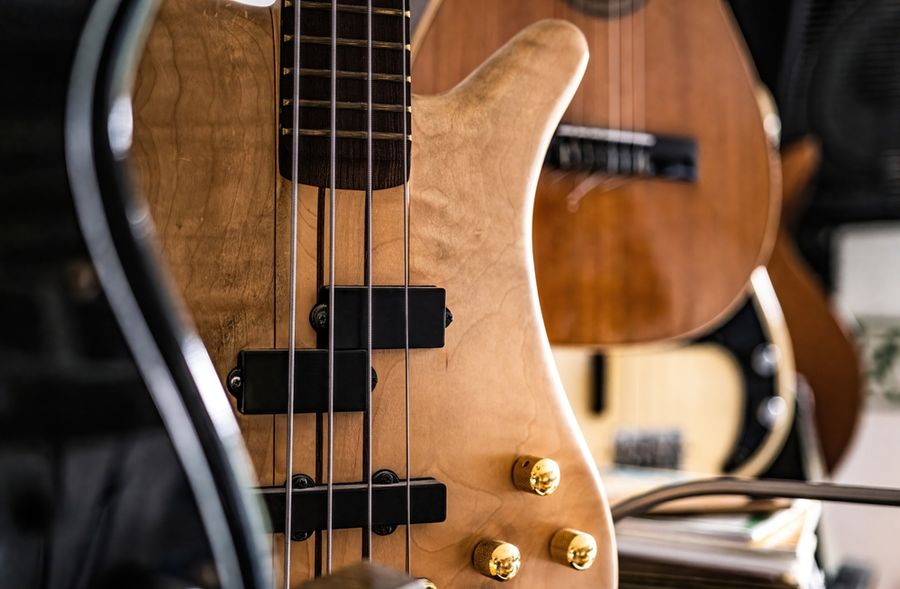
Learning bass is easier when the instrument feels manageable in your hands and does not make basic techniques unnecessarily difficult. Neck width, scale length, body size, pickup controls, and overall setup can all influence how approachable those first months feel. Some beginners prefer a shorter instrument, while others want to learn immediately on a traditional full-scale bass. Several models offer different combinations of comfortable dimensions, straightforward controls, and enough tonal flexibility to remain useful as your playing develops.
Know What Makes a Bass Beginner-Friendly
There is no single ideal bass for every new player. Short-scale models reduce the distance between frets, which can feel more manageable for smaller hands or players coming from guitar. Full-scale basses provide the dimensions found on many widely used instruments, letting beginners become accustomed to that spacing from the start.
Controls should also be understandable. A simple pickup and tone arrangement makes it easier to hear how adjustments change the sound without introducing a large number of switches or EQ options. Most importantly, choose an instrument that feels comfortable enough that you actually want to pick it up regularly.
1) Squier Affinity Series Precision Bass PJ
The Squier Affinity Series Precision Bass PJ combines familiar full-scale bass dimensions with a relatively straightforward control layout. Its 34-inch scale neck has a slim C-shaped profile, while the body is designed to be thin and lightweight.
The PJ pickup configuration pairs a split single-coil Precision-style pickup in the neck position with a Jazz-style single coil at the bridge. Separate volume controls let you blend the two sounds, while one master tone control keeps adjustment simple.
That versatility is useful for a beginner who has not yet settled on one style of music. You can experiment with rounder neck-pickup sounds, brighter bridge tones, or combinations of both without needing complicated active electronics.
With a standard 34-inch scale and 20 frets, this model also provides a conventional platform for learning common fingering positions and bass techniques.
2) Ibanez GSRM20 miKro
The Ibanez GSRM20 miKro is substantially shorter than a traditional full-scale bass. Its 28.6-inch scale brings the frets closer together, while the neck measures 38 millimeters across at the nut. It has 22 medium frets and passive P- and J-style pickups.
That compact scale can be especially appealing to younger players, guitarists moving to bass, or anyone who finds a 34-inch instrument physically awkward. Reaching lower notes requires less stretching, and the overall instrument takes up less room during seated practice.
The two-pickup layout also gives beginners room to explore different sounds without turning tone adjustment into a separate lesson. You can concentrate primarily on fretting notes cleanly, keeping time, and developing consistent plucking technique.
A short scale does feel different from a full-scale bass, so players planning to switch later should expect some adjustment in fret spacing. For learning comfortably now, however, the reduced reach can be a major advantage.
3) Yamaha TRBX174
The Yamaha TRBX174 keeps the basic formula familiar: four strings, a 34-inch scale, 24 medium frets, and passive electronics. Its pickup combination uses a ceramic split single-coil at the neck and a ceramic single-coil at the bridge. Each pickup has its own volume control, accompanied by a master tone control.
That arrangement gives a beginner useful tonal variety while remaining easy to understand. Turning one pickup down lets you hear the character of the other more clearly, while combining them produces additional variations.
The 24-fret neck also provides a wider note range than several other beginner-oriented basses. You may not use those upper frets immediately, but they leave room to explore more of the fingerboard as your technique develops.
Because it uses a conventional 34-inch scale, the TRBX174 makes sense for someone who wants to become comfortable with standard bass spacing from the beginning rather than transitioning from a shorter instrument later.
4) Gretsch G2220 Junior Jet Bass II
The Gretsch G2220 Junior Jet Bass II uses a 30.3-inch scale, positioning it between the very compact Ibanez miKro and traditional 34-inch models. It has a 1.56-inch nut width, 20 medium-jumbo frets, two single-coil bass pickups, and a three-position pickup selector.
The shorter scale reduces the distance between frets without making the instrument as compact as some dedicated short-scale designs. That can make it an appealing compromise for players who want easier reach but still prefer a bass with more traditional proportions.
Its controls are particularly easy to understand. A three-way switch selects the bridge pickup, both pickups, or the neck pickup, while master volume and tone knobs handle the remaining adjustments.
That simplicity lets a new player change sounds quickly without having to balance separate volume knobs during practice.
Make Setup Part of the Buying Decision
Even a beginner-friendly bass can feel difficult if its setup is poor. Excessively high strings can make fretting notes tiring, while extremely low action may produce unwanted buzzing. Tuning stability, neck relief, and intonation also affect how satisfying the instrument feels to practice.
If possible, try several basses while seated and standing. Pay attention to whether your fretting hand reaches the first few frets comfortably, whether the body feels balanced, and whether the neck shape suits your hand.
A professional setup can also be worthwhile when an otherwise suitable instrument feels harder to play than expected.
Choose the Bass That Encourages More Practice
The Squier Affinity Precision Bass PJ and Yamaha TRBX174 offer traditional full-scale dimensions, while the Ibanez GSRM20 miKro prioritizes compact reach. The Gretsch Junior Jet Bass II sits between those approaches with a 30.3-inch scale and simple controls.
There is no advantage in choosing a physically demanding instrument simply because it looks more serious. The best beginner bass is one that feels approachable, sounds inspiring, and makes you want to practice again tomorrow. Comfort and simplicity can give you more room to focus on rhythm, technique, and the enjoyment of actually learning the instrument.