

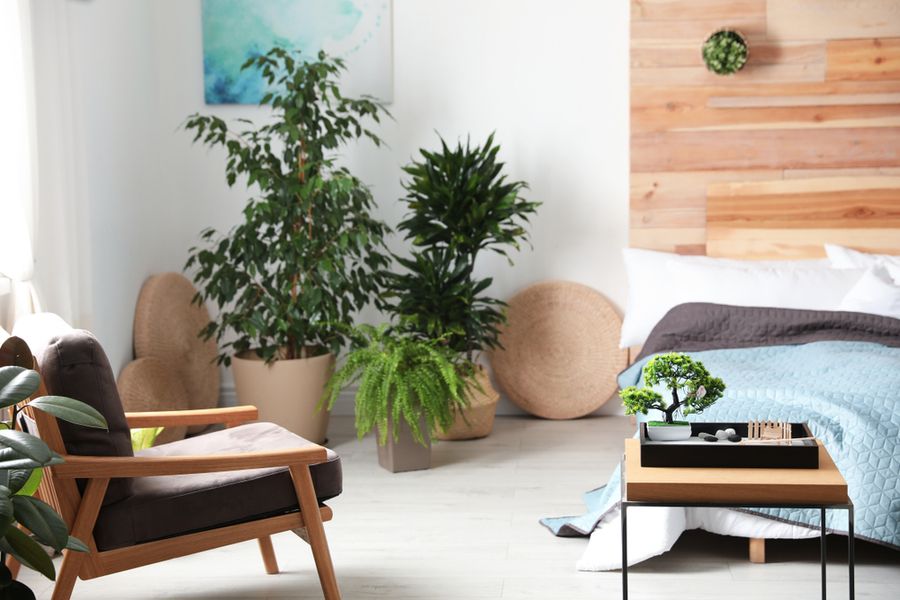
A small bedroom leaves little room for furniture mistakes, which makes thoughtful placement especially important. Feng shui offers a traditional approach to arranging the room around ideas of balance, clear movement, and an intentional relationship between the bed and doorway. You do not need a large space or extensive redesign to apply those principles. By prioritizing the bed, reducing clutter, choosing furniture carefully, and paying attention to mirrors and visual balance, even a compact bedroom can feel calmer and more deliberate.
Put the Bed in the Command Position
In feng shui, the bed is ideally placed in the command position. This means you can see the bedroom entrance while lying down without positioning the bed directly in line with the doorway. A diagonal relationship between the bed and entrance is commonly preferred, with a solid wall behind the headboard when the room allows it.
Small bedrooms rarely offer perfect layouts, so treat this as a priority rather than an inflexible rule. If the only practical bed position provides a poor view of the doorway, a strategically placed mirror can reflect the entrance. Another small-space option is moving the head of the bed farther from the doorway or using a nightstand or another object to create separation between the sleeping area and entrance.
Keep a Solid Wall Behind the Headboard
A solid wall behind the bed is traditionally associated with support and stability in feng shui. If possible, avoid floating the bed in the middle of a small room simply to make another furniture arrangement work. A sturdy headboard against a solid wall reinforces this principle while also creating a clear visual anchor for the room.
When the bed must sit beneath or close to a window, work with the space you have rather than forcing an impractical arrangement. A substantial headboard can visually define the sleeping area, while curtains or shades can create a more finished backdrop. The goal in a tight bedroom is to give the bed a sense of permanence without sacrificing the ability to move comfortably around the room.
Reduce Furniture Before Rearranging It
Too much furniture can make a small bedroom difficult to navigate regardless of where each piece sits. Before searching for the perfect arrangement, decide what the room genuinely needs. A bed, appropriate bedside storage, and clothing storage may be enough. An extra chair, large dresser, or unused shelving unit can consume the limited open space that allows the room to feel functional.
Decluttering and editing belongings are particularly important within small-space feng shui because every object occupies a larger proportion of the available room. Keep surfaces relatively clear and avoid using the bedroom as overflow storage for unrelated belongings. If an item has no useful or intentional role in the room, removing it may improve the layout more effectively than repeatedly shifting it between corners.
Preserve Clear Paths Around the Bed
Once unnecessary furniture is gone, pay attention to how you actually move through the bedroom. The route from the doorway to the bed, closet, dresser, and windows should remain as clear as the dimensions allow. Avoid placing narrow tables, baskets, or decorative items where you need to sidestep them every morning and evening.
Feng shui emphasizes unobstructed movement through a space, and that principle has an obvious practical advantage in a compact bedroom. Keep doors able to open properly and avoid allowing clothing, shoes, or storage containers to gradually fill essential pathways. If space is extremely limited, choose narrower furniture or use vertical storage rather than occupying more floor area.
Be Selective About Under-Bed Storage
The area beneath a bed can look like valuable storage in a small room, but feng shui traditionally favors keeping that space clear rather than filling it with possessions. If your bedroom has sufficient closet or cabinet storage, leaving the area beneath the bed open is the simplest way to follow that principle.
When under-bed storage is unavoidable, be selective. Soft bedding, seasonal linens, or clothing can be less visually and practically disruptive than overflowing boxes of paperwork, work equipment, or miscellaneous possessions. Use closed containers and avoid letting the space become a place where forgotten items accumulate. The aim is to keep necessary storage controlled rather than turning every unused inch into another packed compartment.
Position Mirrors With the Bed in Mind
Mirrors can make a compact bedroom appear visually larger, but feng shui places more importance on what the mirror reflects than on using one simply to create the illusion of space. One common bedroom principle is to avoid positioning a large mirror where you can see yourself reflected while lying in bed.
Instead, try placing a mirror on a side wall, inside a closet door, or somewhere that reflects a view you enjoy rather than the sleeping area. Mirrors can also become practical solutions when the bed cannot achieve the command position, since a carefully angled mirror can provide a view of the doorway. One well-positioned mirror is often more useful in a small room than several reflective surfaces competing for attention.
Create Balance Without Matching Everything
Symmetry can help a small bedroom look more settled, but balance does not require identical furniture. If space allows access to both sides of the bed, small nightstands or similar visual elements can help prevent one side from appearing much heavier than the other. When the bed must sit closer to one wall, use lighting, artwork, or another compact element to create visual balance without sacrificing valuable floor space.
Keep the color palette similarly controlled. Small-space feng shui guidance favors cohesive palettes and suggests limiting the number of dominant colors rather than filling a compact room with unrelated tones. Soft neutrals can provide the foundation, while pillows, bedding, artwork, or small accessories introduce additional color without overwhelming the room.
Let the Bedroom Feel Like a Bedroom
A small bedroom can easily become an office, exercise space, storage area, and entertainment room at the same time. When possible, keep work materials and other visually demanding activities away from the immediate sleeping area. Even if a desk must remain in the bedroom, organize it after use rather than allowing paperwork and equipment to spread toward the bed.
The same restraint applies to decoration. Select a few pieces that support the atmosphere you want rather than filling every wall and surface because space is available. Feng shui for small spaces emphasizes choosing possessions and artwork intentionally instead of allowing sentimental items or miscellaneous decor to dominate the room.
Make the Small Space Feel Intentional
A feng shui-inspired bedroom does not depend on having enough square footage to follow every traditional recommendation perfectly. Start with the bed, aim for a clear view of the entrance, give the headboard a supportive position, and preserve as much open movement as the room permits. Then reduce clutter and arrange mirrors, storage, furniture, and color around those priorities.
The most successful layout is one you can comfortably maintain. A small bedroom becomes harder to enjoy when every surface is full and every pathway requires negotiation. By choosing fewer objects and giving the most important furniture a deliberate position, you can create a compact bedroom that feels organized, balanced, and genuinely restful.