

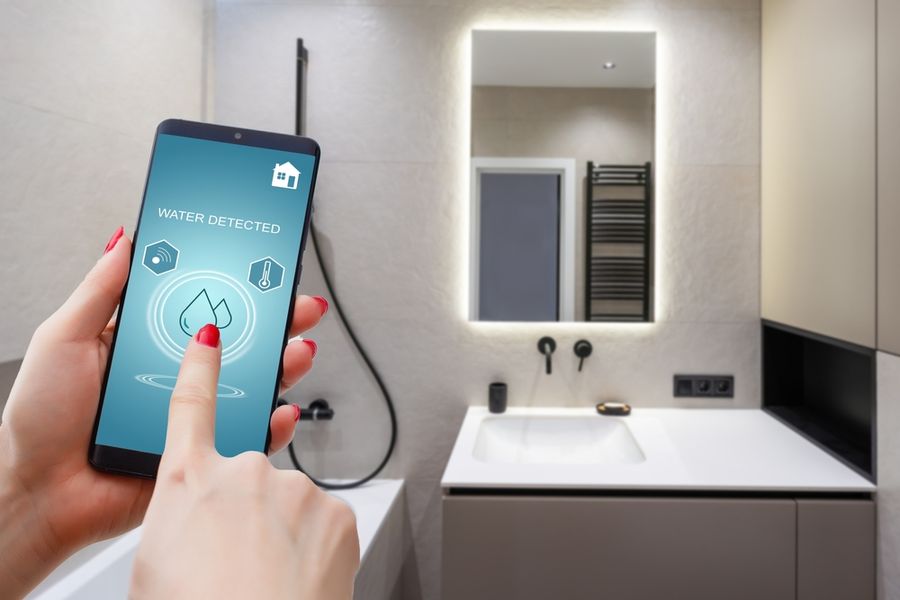
A small leak beneath a sink, behind a washing machine, or near a water heater can remain unnoticed until it spreads beyond the original problem area. Water leak detectors provide an early warning by sounding an alarm, sending a phone notification, or both when moisture reaches the sensor. Some models also monitor freezing conditions or cover larger areas with sensing cables. Several top options can help homeowners catch water problems before they become harder to manage.
Decide Where Detection Matters Most
Start by identifying the places where water is most likely to appear unnoticed. Under sinks, beside washing machines and dishwashers, near water heaters, around sump pumps, and close to basement plumbing are logical locations. A sensor placed several feet away from a likely leak will not help until the water reaches it, so positioning matters as much as the device itself.
Also decide whether a local alarm is enough. If you spend significant time away from home, remote notifications may be more useful because you can learn about a leak without being close enough to hear the detector. Larger homes may benefit from several inexpensive sensors, while a sensing-cable design can monitor a wider continuous area with one device.
Kidde Water Leak + Freeze Detector: Simple Wi-Fi Monitoring
The Kidde Water Leak + Freeze Detector is a straightforward choice for homeowners who want phone alerts without installing a separate hub. It connects with the Kidde app, sends mobile notifications when water or conditions approaching freezing are detected, and also sounds an audible alarm at the device. Setup uses a QR code on the back of the detector.
That combination works well for individual high-risk locations such as beneath a kitchen sink or next to a refrigerator water line. Freeze monitoring also adds value in basements, utility rooms, or other spaces where dropping temperatures could become a concern during winter. Because no additional hub is required, adding a detector does not necessarily mean adding another piece of smart-home hardware.
Ring Flood & Freeze Sensor (2nd Gen): Useful for Ring Households
The second-generation Ring Flood & Freeze Sensor detects water and can issue an alert when temperature drops below 40°F. Unlike the earlier Ring Alarm accessory, the current model does not require a Ring Alarm Base Station. It connects through Amazon Sidewalk, runs on two AA alkaline batteries, carries an IP66 rating, and includes an 85-decibel siren that can be activated remotely.
This model is particularly appealing if you already use the Ring app and would rather keep another home-monitoring device within the same environment. Its compact design makes it easy to position near a washing machine, water heater, sink, or other leak-prone location. Amazon Sidewalk coverage is required, however, so confirm that the connectivity approach fits your home before choosing it solely for its lack of a conventional hub.
GoveeLife Water Leak Detector 1s: Strong for Multi-Sensor Coverage
The GoveeLife Water Leak Detector 1s is designed around multiple sensors communicating with a Wi-Fi gateway. Individual detectors use top and bottom probes to identify drips or pooled water, and the system can send app and email notifications in addition to sounding a customizable alarm rated at up to 105 decibels. The detectors carry an IP67 rating and have a stated battery life of up to five years.
This approach makes sense when you want to monitor several separate areas rather than one problem spot. One sensor might sit under the kitchen sink, another beside the water heater, and another near a basement appliance. The gateway is required for connected functions, so it adds one component to the setup, but it allows several detectors to report through the same system.
Eve Water Guard: Best for Monitoring a Wider Area
Most leak detectors watch the small patch of floor directly beneath them. Eve Water Guard instead uses a 6.5-foot sensing cable, allowing water to trigger an alert anywhere along that cable. Additional cable sections can extend the monitored length substantially. The unit also provides a 100-decibel siren, a flashing visual warning, and notifications to compatible Apple devices.
That design can be especially useful beneath a row of appliances, around a utility area, or along spaces where predicting the exact location of a leak is difficult. The tradeoff is that Water Guard requires a nearby electrical outlet rather than operating as a completely wireless battery sensor. Remote notifications also depend on the compatible Apple home setup required for away-from-home access.
Put Sensors Where Water Will Reach Them Early
A detector works only after moisture reaches its sensing surface or cable. Position units at the lowest practical point near likely leak sources rather than on a shelf above them. Under-sink plumbing joints, washing-machine hoses, refrigerator supply lines, toilets, water heaters, and HVAC equipment that produces condensate can all deserve attention depending on the layout of your home.
Avoid hiding a detector somewhere that makes its audible alarm difficult to hear or its batteries difficult to replace. Test each unit after setup according to its instructions, and make sure phone notifications actually arrive before depending on them. If you move an appliance or reorganize a utility area, reconsider whether the sensor remains in the most useful location.
Think About What Happens After the Alert
A leak detector provides information; you still need a plan for responding to it. Know where the relevant appliance shutoff and the home's main water shutoff are located. If an alert arrives while you are away, having a nearby family member, neighbor, property manager, or other trusted person who can investigate may be useful.
Remote alerts become more valuable when they lead to quick action. Labeling shutoff valves and keeping access to them clear can save time when water is already spreading. A detector should therefore be part of a broader approach to catching leaks rather than something installed and forgotten indefinitely.
Choose Coverage Before Extra Features
The most sophisticated detector is not automatically the best one for every location. Kidde provides straightforward Wi-Fi alerts without another hub, while Ring's second-generation sensor combines water and freeze detection within the Ring environment. GoveeLife is well suited to spreading several sensors around a home, and Eve Water Guard uses a sensing cable when broader floor coverage is more important than a single detection point.
Start by mapping the places where an unnoticed leak could cause the most trouble, then choose the detector that covers those areas effectively. A well-positioned basic sensor can be more useful than an advanced model installed too far from the likely source. Catching water early depends on having the right detection method in the right place before the leak begins.