

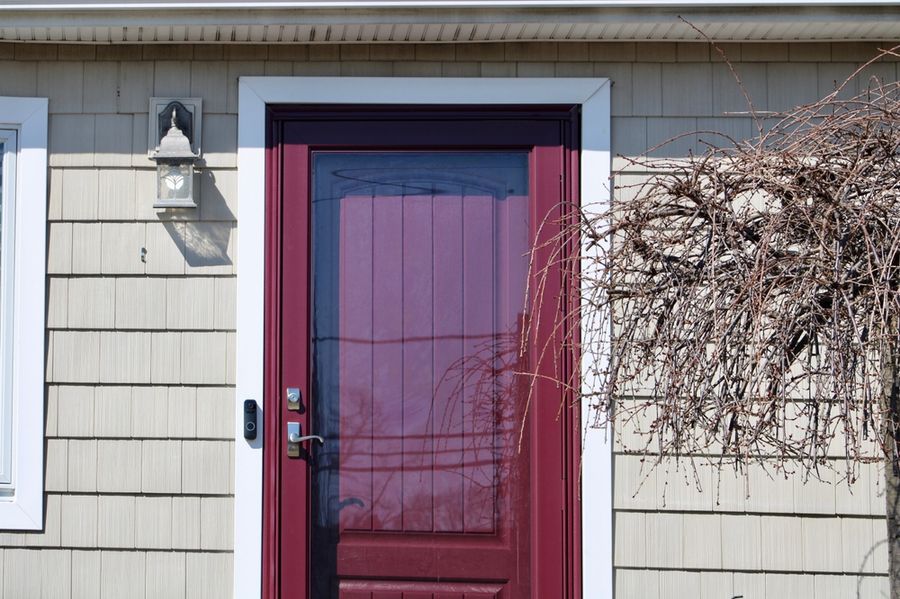
A storm door can do more than sit between your entry door and the weather. Depending on its design, it can help protect the main door, provide seasonal ventilation, bring more daylight into an entryway, add another physical barrier, and reduce some air movement around the entrance. Those benefits can remain useful well beyond winter. The key is choosing a model suited to your climate and using its glass, screen, and hardware features appropriately throughout the year.
1. Protect the Main Entry Door From Weather
A storm door creates a second exterior layer in front of the primary entry door. That outer barrier can take the first exposure to rain, wind, snow, ice, and airborne debris, helping reduce direct weathering of the door behind it. This can be especially useful for painted or finished entry doors that receive regular exposure rather than sitting beneath a deep covered porch.
Protection matters in warm months too. Sun, wind-driven rain, and summer storms do not stop affecting an entryway when winter ends. A storm door can continue shielding the main door while still allowing homeowners to change the insert or open a retractable screen when conditions are comfortable.
2. Add Fresh Air Without Leaving the Entry Fully Open
Many modern storm doors combine glass with an interchangeable or retractable insect screen. Opening the main entry door while leaving the storm door closed can allow outside air through the screen while maintaining a physical barrier at the doorway. That makes the feature useful during mild spring mornings, summer evenings, and comfortable fall weather.
Retractable designs make the seasonal transition particularly simple because the screen can roll into the door rather than requiring a separate panel to be stored. Interchangeable designs can provide a larger screened area when ventilation is the priority. In either case, the advantage is flexibility: the same doorway can shift between weather protection and ventilation without requiring a dedicated screen door.
3. Bring More Natural Light Into the Entryway
A solid front door can make a foyer or hallway noticeably darker when it remains closed. A full-view or partial-view storm door allows the main door to stay open while the storm door remains shut, letting daylight enter through the glass. This can make a narrow entrance feel brighter without adding a window or changing the structure of the house.
Natural light is useful in every season, although how much you receive depends on the orientation of the entry and surrounding porches, trees, and buildings. Full-view models maximize the glazed area, while partial-view doors trade some of that openness for a larger lower panel. The right balance depends on whether light, ventilation, pets, or durability is the bigger priority.
4. Create Another Barrier at the Entrance
A storm door adds another operable layer between the exterior and the living space. Some models include keyed deadbolts or other locking hardware in addition to the lock on the primary entry door. That does not make a storm door a substitute for a properly installed exterior door and lockset, but it does place another door between the outside and the home's interior.
This extra layer can be useful even when security is not the main goal. It provides separation between the living space and outdoors when the primary door is open for ventilation. Households with pets may also appreciate having another closed barrier at the entry, although the door should always be latched and used according to its design.
5. Improve Comfort Around Some Entryways
A properly fitted storm door creates an additional space between the outdoors and the primary door. Weatherstripping and appropriate glass can help reduce air movement and heat transfer around the entry, although the size of the benefit depends on the existing door, installation, climate, and storm-door design. It is better to think of this as a potential comfort improvement than a guarantee of dramatic energy savings.
Glass selection matters as well. Low-emissivity glass is available on some storm doors and is designed to reflect radiant heat more effectively than standard glass. Strong direct sun requires additional consideration, however, because heat can build up between a storm door and the primary entry door under some conditions. Check the manufacturer's recommendations for sun exposure, glass type, and compatibility with the existing entry door.
Adapt the Door as the Seasons Change
Year-round usefulness comes from changing how you use the storm door rather than treating it as a fixed winter accessory. In colder weather, glass and intact weatherstripping can create another barrier at the entrance. During comfortable spring, summer, and fall conditions, a screen can provide airflow while helping keep insects outside.
Seasonal maintenance also matters. Check weatherstripping, the bottom sweep, latches, closers, screens, and glass periodically so the door continues to operate properly. Interchangeable panels should be stored somewhere protected when they are not installed, while retractable screens should move freely and close properly before the season when you expect to use them most.
Make the Entry Work in Every Season
A storm door is most valuable when its features match how your household actually uses the entrance. Weather protection may be the priority in winter, while screens and natural light become more useful as conditions warm. Locking hardware, glass selection, and the ability to change ventilation can keep the same door relevant as the weather changes.
Before choosing one, consider the entry's sun exposure, local climate, ventilation needs, pets, and whether you prefer retractable or interchangeable screens. A well-matched storm door can make an existing entrance more adaptable throughout the year without requiring changes to the primary exterior door.